Showing posts with label Manuel Grunden. Show all posts

Wednesday, December 25, 2024

Twelve Days of Christmas

Christmas Day - William Byrd: This Day Christ Was Born (1611)

From conductor Harry Christophers: "I first encountered the music of William Byrd when I was a chorister at Canterbury Cathedral. One piece stuck in my memory, his rarely performed Christmas anthem This Day Christ Was Born. I loved it! Little did I know that 60 years later I would find out that it came from his last publication Psalmes, Songs, and Sonnets (1611). We recorded it (with the choral ensemble The Sixteen) during the Covid years – for me, one of the few good things to come out of that dire time. Byrd’s music is extraordinary – often incredibly complex, always inventive and emotionally challenging."

This day Christ was born,
This day our Saviour did appear,
This day the Angels sing in earth,
The Archangels are glad;
This day the just rejoice, saying,
Glory be to God on high.
Allelujah!

William Byrd: This Day Christ Was Born - The Sixteen & Harry Christophers


I Saw Three Ships

This English Christmas Day carol is so simple that it lends itself to additional lyrics and, at times, an added chorus tune (which we'll see in some of our performances below).

The earliest printed version of I Saw Three Ships is from the 17th century, possibly Derbyshire. It was also published by William Sandys in his 1833 Christmas Carols Ancient and Modern. The song was probably traditionally known as As I Sat On a Sunny Bank, and was particularly popular in Cornwall.

The lyrics mention the ships sailing into Bethlehem, but the nearest body of water is the Dead Sea about 20 miles (32 km) away! The reference to three ships is thought to originate in the three ships that bore the purported relics of the Biblical magi to Cologne Cathedral in the 12th century. Another possible reference is to Wenceslaus II, King of Bohemia, who bore a coat of arms "Azure three galleys argent".


Another suggestion is that the ships are actually the camels used by the Magi, as camels are frequently referred to as "ships of the desert". And, over the passage of time, as the text moved from village to village, and from country to country, the song acquired numerous different variations in texts and tunes. (note thanks to Hymns and Carols of Christmas)

I saw three ships come sailing in
On Christmas day, on Christmas day;
I saw three ships come sailing in
On Christmas day in the morning.

And what was in those ships all three,
On Christmas day, on Christmas day?
And what was in those ships all three,
On Christmas day in the morning?

Our Saviour Christ and his lady,
On Christmas day, on Christmas day;
Our Saviour Christ and his lady,
On Christmas day in the morning.

Pray whither sailed those ships all three,
On Christmas day, on Christmas day?
Pray whither sailed those ships all three,
On Christmas day in the morning?

O they sailed into Bethlehem,
On Christmas day, on Christmas day;
O they sailed into Bethlehem,
On Christmas day in the morning.

And all the bells on earth shall ring,
On Christmas day, on Christmas day;
And all the bells on earth shall ring,
On Christmas day in the morning.

And all the Angels in Heaven shall sing,
On Christmas day, on Christmas day;
And all the Angels in Heaven shall sing,
On Christmas day in the morning.

And all the Souls on Earth shall sing,
On Christmas day, on Christmas day;
And all the Souls on Earth shall sing,
On Christmas day in the morning.

Then let us all rejoice amain,
On Christmas day, on Christmas day;
Then let us all rejoice amain,
On Christmas day in the morning.

I Saw Three Ships - King's College Cambridge (arr. Philip Ledger)


I Saw Three ShipsBlackmore's Night


I Saw Three Ships - Fisherman's Friends, with new lyrics and an added "tag" to boot!


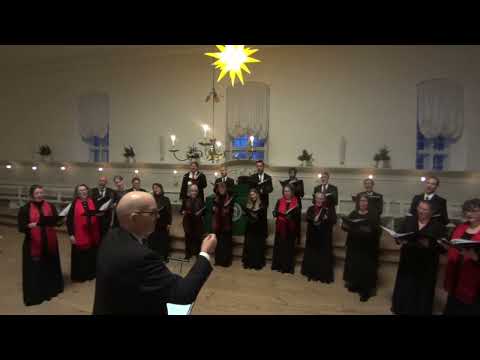
I Saw Three Ships - in a wonderful modern arrangement by Manuel Grunden


. . . and if you haven't had enough . . .

I Saw Three Ships   Pentatonix

I Saw Three Ships   Sarah and Michael Bowman

I Saw Three Ships   King's College Cambridge (arr. Simon Preston), a more adventurous arrangement


Sunday, December 15, 2024

Twelve Day (Before) Christmas

Day 9Ding Dong Merrily on High

The origin of today's carol - Ding Dong Merrily on High - dates back over 400 years ago. The tune, Branle de L'Official, was found in the 1588 work Orchesographie, a 16th-century study of French dance forms by Thoinot Arbeau (the anagrammatic pen name of French cleric Jehan Tabourot). This study provides information on social ballroom behavior and on the interaction of musicians and dancers, while also containing numerous woodcuts of dancers and musicians, and detailed instructions for the various dances. It is considered perhaps the most valuable book on 16th century dance. Branle de L'Official was considered primarily a dance for the common people, although it did become somewhat popular among the nobility. This tune, used for Ding Dong Merrily on High, is virtually unchanged from its 1588 original. Lyrics were added to this dance tune by George Ratcliffe Woodward, and the carol was first published, with a harmonization by Charles Wood, in The Cambridge Carol-Book: Being Fifty-two Songs for Christmas, Easter, And Other Seasons (1910).

1. Ding dong merrily on high,
In heav'n the bells are ringing:
Ding dong verily the sky
Is riv'n with angel singing.

Chorus
Gloria, Hosanna in excelsis!

2. E'en so here below, below,
Let steeple bells be swungen,
And "Io, io, io!"
By priest and people sungen.  Chorus

3. Pray you, dutifully prime
Your matin chime, ye ringers;
May you beautifully rime
Your evetime song, ye singers.  Chorus


Ding Dong Merrily on HighThe Mercer Singers


Ding Dong Merrily on HighKings College Choir (arr. Mack Wilberg) . . . a classic


Ding Dong Merrily on High - arr. Manuel Grunden, Pop-Up Detmold / a freshly inventive modern version


Twelve Days of Christmas

Epiphany - Bright and Glorious is the Sky The Epiphany , January 6, traditionally marks the end of Christmas and tells the story (from the ...