Showing posts with label ANÚNA. Show all posts

Saturday, December 27, 2025

Twelve Days of Christmas

Day 4Coventry Carol (Lullaby Carol)

This carols is one of many songs and hymns that relate to the Feast Day of the Holy Innocents, December 28th. The Coventry Carol - also know as the Lullaby Carol - is an English Christmas carol dating from the 16th century. It was traditionally performed in Coventry, England as part of a mystery play called The Pageant of the Shearmen and Tailors. The play depicts the Christmas story as described in Matthew, Chapter 2 in the Bible. The carol references the Massacre of the Innocents, in which Herod ordered all male infants under the age of two in Bethlehem to be killed, and takes the form of a lullaby sung by the mothers of the doomed children. The oldest known text of the carol was written down by Robert Croo in 1534, and the oldest known melodic setting dates from 1591.

The words of the carol focus on grief, lamentation, and the human cost of Herod’s decree, using simple, repetitive language to evoke emotional intensity. Lines such as Lully, lullay, thou little tiny child function as a cradle song, blending tenderness with tragedy. This juxtaposition of lullaby and lament highlights the vulnerability of the infant Jesus and the surrounding suffering, deepening the carol’s emotional resonance and theological reflection on the contrast between human sin and divine salvation. (thanks to  Hymnallibrary.com)

Refrain
Lully, lulla
Thou little tiny Child
By by, lully, lullay

O sisters too,
How may we do,
For to preserve this day?
This poor Youngling
For Whom we do sing
By by, lully, lullay?  (Refrain)

Herod the king,
In his raging,
Chargèd he hath this day
His men of might,
In his own sight,
All young children to slay.  (Refrain)

That woe is me,
Poor Child for Thee!
And ever morn and may,
For thy parting
Neither say nor sing,
By, by, lully, lullay.


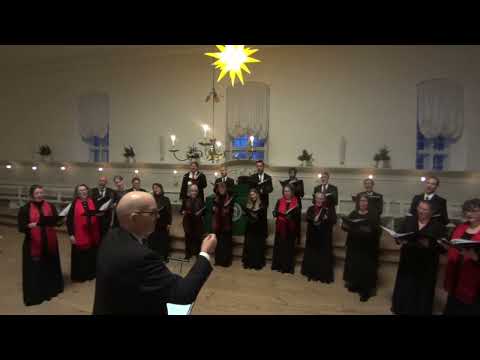
Coventry Carol - The Anúna Collective (arr. Michael McGlynn)


Coventry Carol - Voces8 U.S. Scholars (arr. by Barnaby Smith)


. . . and another version by composer Kenneth Leighton

Coventry Carol - King's College Choir


Thursday, January 4, 2024

Twelve Days (After) Christmas

Day 10 - The Wexford Carol

The Wexford Carol is a traditional Irish carol from Enniscorthy, in County Wexford. Sometimes known by its first verse "Good people all this Christmas time", the carol is of uncertain origins, and, while it is occasionally claimed to be from the early Middle Ages, it was likely composed in the 15th or 16th century. The subject of the song is the nativity of Jesus Christ.

Good people all, this Christmas time
Consider well and bear in mind
What our good God for us has done
In sending his beloved son

With Mary holy we should pray
To God with love this Christmas Day
In Bethlehem upon that morn
There was a blessed Messiah born

Near Bethlehem did shepherds keep
Their flocks of lambs and feeding sheep
To whom God's angels did appear
Which put the shepherds in great fear

'Prepare and go, ' the angels said
'To Bethlehem, be not afraid
For there you'll find, this happy morn
A princely babe, sweet Jesus born

With thankful heart and joyful mind
The shepherds went, this babe to find
And as God's angel had foretold
They did our saviour Christ behold

Within a manger he was laid
And by his side the virgin maid
Attending on the Lord of life
Who came on earth to end all strife

Good people all, this Christmas time
Consider well and bear in mind
What our good God for us has done
In sending his beloved Son

With Mary holy we should pray
To God with love this Christmas day
In Bethlehem upon that morn
There was a blessed Messiah born

The Wexford Carol - Anúna


The Wexford Carol - Tiffany Schaefer


The Wexford Carol - on a Bb Wexford whistle!


Saturday, January 1, 2022

Twelve Days of Christmas

Day 8 - Ríu Ríu Chíu [Spain]

Ríu Ríu Chíu, also known as Ríu Chíu, is a Spanish villancico that has attained contemporary fame as a Christmas carol. The song is usually attributed to Mateo Flecha the Elder (1481–1553). It's believed that the words ríu, ríu, chíu are an imitation of a bird call. The carol's basic theme is the nativity of Christ and the Immaculate Conception.

Riu riu chiu, la guarda ribera;
     [Riu, riu, chiu, the river bank protects it]
Dios guardo el lobo de nuestra cordera.
     [As God kept the wolf from our lamb]

(1) El lobo rabioso la quiso morder,
     [The rabid wolf tried to bite her]
Mas Dios poderoso la supo defender;
     [But God Almighty knew how to defend her]
Quisola hazer que no pudiese pecar,
     [He wished to create her impervious to sin]
Ni aun original esta Virgen no tuviera.
     [Nor was this maid to embody original sin.]

(2) Este qu'es nacido es el gran monarca,
     [He who's now begotten is our mighty Monarch]
Christo patriarca, de carne vestido;
     [Christ, our Holy Father, in human flesh embodied]
hanos redimido con se hacer chiquito,
     [He made himself small and so redeemed us]
a un qu'era infinito, finito se hiziera.
     [He who was infinite became finite.]

(3) Muchas profecias lo han profetizado,
     [Many prophecies told of his coming]
Ya un nuestros dias lo hemos al consado
     [And now in our days have we seen them fulfilled]
Adios humanado vemos en el suelo,
     [God became man, on earth we behold him]
Yal hombre nelcielo porquel le quistera.
     [And see man in heaven because he so willed.]

(4) Yo vi mil garzones que andaban cantando,
     [A thousand singing angels I saw passing]
por aquí volando, haciendo mil sones,
     [Flying overhead, sounding a thousand voices]
diciendo a gascones: "Gloria sea en el cielo
     [Exulting, "Glory be in the heavens]
y paz en el suelo", pues de sus nasciera.
     [And peace on Earth, for Jesus has been born."]

(5) Este viene a dar a los muertos vida
     [He comes to give life to the dead]
y viene a reparar de todos la caída;
     [He comes to redeem the fall of man]
es la luz del día aqueste mozuelo;
     [This child is the light of day]
este es el cordero que San Juan dixera.
     [He is the very lamb Saint John prophesied.]

(6) Mira bien queos quadre que ansina lo oyera,
     [Behold . . .]
Que Dios no pudiera hacer la mas que madre,
     [God could call none greater mother]
El quera su padre hoy della nascio
     [than she who gives birth to her father]
Y el que la drio su hijo so dixera.
     [and now calls Him Son.]

(7) Pues que ya tenemos lo que deseamos,
     [Now we have gotten what we were all desiring]
todos juntos vamos, presentes llevemos;
     [Go we together to bear him gifts]
todos le daremos muestra voluntad,
     [Let each give his will to the God who was willing]
pues a se igualar con el hombre viniera.
     [To come down to Earth man's equal to be.]


Ríu Ríu Chíu - The Boston Camerata


Ríu Ríu Chíu - Anúna (arr. M. McGlynn)


Ríu Ríu Chíu - Lithuanian Boys Choir Dagilelis


Tuesday, December 14, 2021

Twelve Days (Before) Christmas

Day 10 - Noël Nouvelet [France]

Noël Nouvelet is a traditional French Christmas and New Year's carol. The carol dates from the late 15th or early 16th century, and there are at least 13 verses available to sing. The word nouvelet has the same root as Noël, both stemming from the word for news and newness. The song was long ago translated into English as Sing We Now of Christmas, though the English lyrics (usually 5 verses) are somewhat different from the original French ones.

Some sources say it was a song celebrating the New Year. Others point out that the lyrics mainly speak of the news of the birth of the Christ Child in Bethlehem, the announcement by angels to the shepherds in the fields, looking forward to the visit of the Three Kings and the presentation of their gifts to the Holy Family. The carol also celebrates the figures in the crèche, the handmade nativity scenes found throughout France, where they are part of the Christmas celebration in homes and in town squares. And at the time it was written it was sung by families at home and at community gatherings, rather than as part of the liturgy in Roman Catholic churches.
[thanks to the folks at ThoughtCo.com]

Noël nouvelet, Noël chantons ici,
     [New Christmas, Christmas we sing here] - literal English translation
Dévotes gens, crions à Dieu merci!
     [Devout people, let us shout our thanks to God!

Chorus :
Chantons Noël pour le Roi nouvelet!
     [Let us sing Christmas for the new King!]
Chantons Noël pour le Roi nouvelet!
Noël nouvelet, Noël chantons ici!
     [New Christmas, Christmas we sing here.

Quand je m’éveillai, et j’eus assez dormi,
     [When I awoke, and had enough sleep]
Ouvris les yeux, vis un arbre fleuri,
     [Open your eyes, see a flowering tree]
Dont il sortait un bouton vermeillet.
     [From which a ruddy button came out]
Noël nouvelet, Noël chantons ici.
     [Christmas new, Christmas singing here]

D’un oyselet après le chant oui,
     [An angel after hearing the songs]
Qui aux pasteurs disait: 'Partez d’ici
     [Said to the shepherds: “Leave here]
En Bethléem trouvèrent l’agnelet
     [in Bethlehem you’ll find the little lamb]
Noël nouvelet, Noël chantons ici.
     [Christmas new, Christmas singing here]

~  ~  ~  ~  ~  ~  ~  ~   

Sing we now of Christmas, Noel, sing we here!
Hear our grateful praises to the babe so dear.

Refrain:
Sing we Noel, the King is born, Noel!
Sing we now of Christmas, sing we now Noel!

Angels called to shepherds, "Leave your flocks at rest,
journey forth to Bethlehem, find the lambkin blest." [Refrain] 

In Bethlehem they found him; Joseph and Mary mild,
seated by the manger, watching the holy child. [Refrain]

From the eastern country came the kings afar,
bearing gifts to Bethlehem guided by a star. [Refrain] 

Gold and myrrh they took there, gifts of greatest price;
there was ne'er a place on earth so like paradise. [Refrain]

Noël nouvelet - ANÚNA


Noël nouvelet - The King's Singers


Noël nouvelet - Apollo's Fire


And here's a baroque interpretation of Noël nouvelet by composer Edwin McLean


Twelve Days of Christmas

Epiphany - Bright and Glorious is the Sky The Epiphany , January 6, traditionally marks the end of Christmas and tells the story (from the ...