Day 4 - The Friendly Beasts
This song originally hails from a 12th century Latin song Orientis Partibus which first appeared in France and is usually attributed to Pierre de Corbeil, Bishop of Sens (died 1222). The tune is said to have been part of the Fete de l’Ane (The Donkey’s Festival), which celebrated the flight of the Holy Family into Egypt and was a regular Christmas observance in Beauvais and Sens, France in the 13th century. During the mass, it was common for a donkey to be led or ridden into the church. The words and tune were designed to give thanks for the ass on which Mary rode. Each verse was sung, and finished with the chorus "Hail, Sir donkey, hail." It was a solemn affair, but the tune became very popular in 17th and 18th century Germany.
Orientis partibus adventavit asinus
From eastern parts a donkey came
pulcher et fortissimus, Sarcinis aptissimus
Beautifu and strong, fit for loads
Hez, Sir Asnes, hez! / Hey, Sir Donkey, hey!
Saltu vincit hinnulos damas et capreolos
He leaps over young males and bucks
super dromedarios velox madianeos
Over the swift dromedaries of Midian
Hic in collibus Sychen iam nutritus sub Ruben
Here on the hills of Sychen, brought up under Ruben
transiit per Jordanem saliit in Bethlehem
He has crossed the Jordan and leapt into Bethlehem
Dum trahit vehicula multa cum sarcinula
While he draws fully loaded carts
illius mandibula dura terit pabula
His jaw grinds surely grinds the fodder
Cum aristis, hordeum comedit et carduum
With ears he eats barley and thistles
triticum ex palea segregat in area
He separates wheat from chaff on the threshing floor
Amen dicas, asine Iam satur ex gramine
Amen, you donkey now full with grass
amen, amen itera aspernare vetera
Amen, amen repeat the ancient aspersions
The song emigrated to England in the 12th century, where it began to take on its modern character. It is for this reason that some sources will give the origin of this song as England. The tune has been arranged in both 4/4 time (by Richard Redhead) and 3/4 time (Ralph Vaughan Williams). Robert Davis (1881-1950) apparently wrote the words that we normally associate with this tune in the 1920s. The first publication was in 1934. The Friendly Beasts is also known by the titles The Song of the Ass, or The Donkey Carol, or The Animal Carol and The Gift of the Animals. (a big thank you! to the Hymns and Carols of Christmas for all these detailed notes)
Jesus our brother, kind and good
Was humbly born in a stable rude
And the friendly beasts around Him stood,
Jesus our brother, kind and good.
"I," said the donkey, shaggy and brown,
"I carried His mother up hill and down;
I carried her safely to Bethlehem town."
"I," said the donkey, shaggy and brown.
"I," said the cow all white and red
"I gave Him my manger for His bed;
I gave him my hay to pillow his head."
"I," said the cow all white and red.
"I," said the sheep with curly horn,
"I gave Him my wool for His blanket warm;
He wore my coat on Christmas morn."
"I," said the sheep with curly horn.
"I," said the dove from the rafters high,
"I cooed Him to sleep so He would not cry;
We cooed him to sleep, my mate and I."
"I," said the dove from the rafters high.
Thus every beast by some good spell,
In the stable dark was glad to tell
Of the gift he gave Immanuel,
The gift he gave Immanuel.
"I," was glad to tell
Of the gift he gave Immanuel,
The gift he gave Immanuel.
Jesus our brother, kind and good.
Orientis Partibus - New London Consort
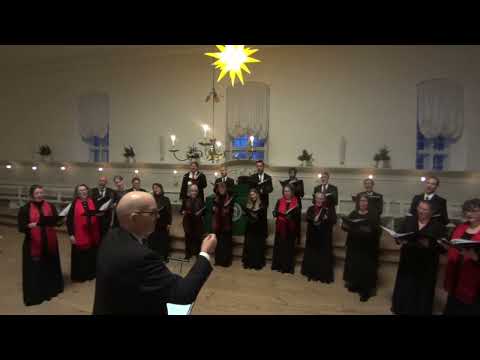
The Friendly Beasts - St. Olaf Choir (arr. by R. Scholz)
The Friendly Beasts - Vocal Essence Ensemble (Robert Farlee, composer)
The Friendly Beasts - Burl Ives
The Friendly Beasts - BlindPigAndTheAcorn (Paul and Pap)



No comments:
Post a Comment