Day 11 - In the Ending of the Year
The words for this carol are from the 12th century anonymous German carol In hoc anni circulo (In the Year's Circle). This text was translated by Rev. John Mason Neale and published in his Medieval Hymns (1863). Neale noted that In hoc anni circulo is "one of the most popular of Christmas Carols, and is found with greater variations than almost any other. There is scarcely a European language which has not had an ancient translation." In 1908 George Radcliffe Woodward reinterpreted Neale's translation and published it in his Songs of Syon. The melody (from the Jistebnicz Kantional, circa 1420) was then harmonized by Woodward for his collection.
The version of In the Ending of the Year we'll hear today, however, is by composer Peter Niedmann, written in 1994 and employing five of Woodward's original ten verses.
1. In the ending of the year
Light and life to man appear:
And the Holy Babe is here,
By the Virgin Mary.
For the Word becometh flesh
By the Virgin Mary.
2. Adam ate the fruit and died,
But the curse, that did betide
All his sons, is turn’d aside
By the Virgin Mary.
For the Word becometh flesh
By the Virgin Mary.
3. Noah shut the Ark of old,
When the flood came, as is told:
Us its doors to-day enfold
By the Virgin Mary.
For the Word becometh flesh
By the Virgin Mary.
4. Every creature of the plain
Own’d the guileful serpent’s reign;
He this happy day is slain
By the Virgin Mary.
For the Word becometh flesh
By the Virgin Mary.
5. Wherefore let our quire to-day
Banish sorrow far away,
Singing and exulting aye
With the Virgin Mary.
For the Word becometh flesh
By the Virgin Mary.
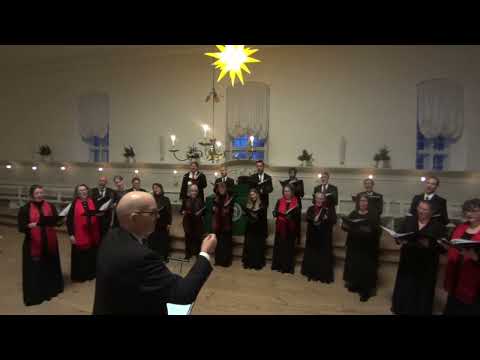
In the Ending of the Year - Harvard University Choir



No comments:
Post a Comment