Wednesday, December 22, 2021

Twelve Days (Before) Christmas

Day 3 - Wij komen van Oosten (We’ve come from the East) [Belgium]

This song for Christmas has an interesting (and confusing) past. Especially for me, since I don't speak or read Dutch! From what I can glean from a number of Dutch language blogs - Thank you, Google Translate! - the text has origins in the 18th century, but some of its now somewhat nonsensical words are distortions of the original text written so long ago. In addition, there are some Belgian references that are lost on non-native speakers. Here's my attempt to make a little sense of it all:

Each verse contains two lines that are clearly related to Christmas and the birth of Christ:

Verse 1 (see below for the full text):
Wij komen van Oosten, wij komen van ver (We come from the East, we come from afar)
Wij zijn er drie koningen met een ster (We are three kings brought by a star)

Verse 2:
Gij sterre gij moet er zo stille niet staan (Thou star thou shouldst not stay so silent)
Gij moet er met ons naar Bethlehem gaan (You must go with us to Bethlehem)

Verse 3:
Te Bethlehem in die kleine stad (At Bethlehem in the small town)
Maria met haar klein kindeke zat (Mary sat with her little child)

Verse 4:
En ‘t kindeke heeft al zo lange geleefd (And the baby lived so long)
Dat ‘t hemel en aarde geschapen heeft (That It created heaven and earth)

Verse 5:
Ja, hemel en aarde en dan nog meer (Yes, heaven and earth and then more)
Dat is er een teken van God de Heer (That's a sign from God the Lord)

Verse 6: this one just contains a note from the singer of the song
Wij hebben gezongen al voor dit huis (We have already sung for this house)
Geeft ons een penning dan gaan we weer naar huis (Give us a token and we'll go home)

Interspersed between and after those Christmas related lines, repeated with each verse,  are these lines:

- - -  [Christmas related text]
A la beline postiljon
- - -  [Christmas related text]
A la beline postiljon, van cher ami tot in de knie
Wij zijn drie koningskinderen
Sa pater trok naar Vendelo, van cher ami

The first bit in the original text was à la berdina kosteljon, a typical popular slip of the French à la berline, postiljon, which meant “to your Berliner carriage, coachman.” And a Berliner carriage was one of the those fancy, horse drawn carriages that kings, queens and royalty traveled around in. Leopold II, the Belgian "Sun King," also drove around in a Berline.

The rest of the text is:
 - van cher ami [a corruption of Jeremie, meaning the prophet Jeremiah]

 - tot in de knie [????; literally translated: up to the knee; maybe it just sounded like a good rhyme to the last phrase!]

 - Wij zijn drie koningskinderen [literally: We are three royal children; a corruption of the earlier text Karel Konings kinderen (King Karl/Charles' children)]

 - Sa pater trok naar Vendelo [literally: Father went to Vendelo] is a corruption of the earlier text pater bonne Franselijn [??? the good Father of French-lineage?]

Or something like that! So, for us English speakers, it doesn't make much sense. And even for Dutch speakers, or Belgians, much of it is nonsense. But of course we're fine with:

Hey, diddle, diddle,
The cat and the fiddle,
The cow jumped over the moon;
The little dog laughed
To see such sport,
And the dish ran away with the spoon.

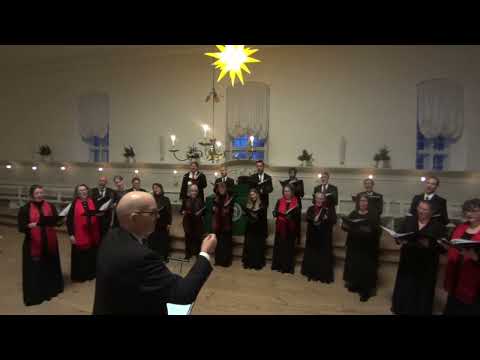
So enjoy the song . . . it certainly looks like our singers today are enjoying themselves! 

Wij komen van Oosten, wij komen van ver
    (We come from the East, we come from afar)
A la beline postiljon
Wij zijn er drie koningen met een ster
    (We are three kings brought by a star)
A la beline postiljon, van cher ami tot in de knie
Wij zijn drie koningskinderen
Sa pater trok naar Vendelo, van cher ami

Gij sterre gij moet er zo stille niet staan
    (O star, thou shouldst not stay there so silent)
A la beline postiljon
Gij moet er met ons naar Bethlehem gaan
    (You must go with us to Bethlehem)
A la beline postiljon, van cher ami tot in de knie
Wij zijn drie koningskinderen
Sa pater trok naar Vendelo, van cher ami

Te Bethlehem in die kleine stad
    (At Bethlehem in the small town)
A la beline postiljon
Maria met haar klein kindeke zat
    (Mary sat with her little child)
A la beline postiljon, van cher ami tot in de knie
Wij zijn drie koningskinderen
Sa pater trok naar Vendelo, van cher ami

En ‘t kindeke heeft al zo lange geleefd
    (And the Baby lived so long)
A la beline postiljon
Dat ‘t hemel en aarde geschapen heeft
    (That It created heaven and earth)
A la beline postiljon, van cher ami tot in de knie
Wij zijn drie koningskinderen
Sa pater trok naar Vendelo, van cher ami

Ja, hemel en aarde en dan nog meer
    (Yes, heaven and earth and then more)
A la beline postiljon
Dat is er een teken van God de Heer
    (That's a sign from God the Lord)
A la beline postiljon, van cher ami tot in de knie
Wij zijn drie koningskinderen
Sa pater trok naar Vendelo, van cher ami

Wij hebben gezongen al voor dit huis
    (We have already sung for this house)
A la beline postiljon
Geeft ons een penning dan gaan we weer naar huis
    (Give us a token and we'll go home)
A la beline postiljon, van cher ami tot in de knie
Wij zijn drie koningskinderen
Sa pater trok naar Vendelo, van cher ami


Wij komen van Oosten


Wij komen van Oosten - Inge & Nicole

Wij komen van Oosten


Wij komen van Oosten


Wij komen van Oosten - Nigel Campbell Pennick (mountain dulcimer)


Tuesday, December 21, 2021

Twelve Days (Before) Christmas

Day 4 - Narodi nam se Kralj nebeski [Croatia]

Narodi nam se Kralj nebeski (The King of Heaven is Born to Us) is a Christmas song originating from northern Croatia. It is one of the most solemn Christmas carols in Croatia, which is why it often receives an honorary place at the end of the Christmas liturgy. In this carol, two key expressions, Young King and Young Summer, take us deep into history. Young King recalls the time of Arpadović in Croatia, when every Hungarian king tried to crown his firstborn as Croatian king as soon as possible. Young Summer reflects the time when the new year began in Croatia on Christmas Day. In this hymn-song all the companions of Christmas are enumerated: St. Stephen (December 26), St. John (December 27), the Innocent Children (December 28), Pope St. Sylvester I, St. Thomas (December 31), Three Kings Day (January 6). All these actually represent different classes; St. Stephen represents the martyrs, St. John the virgin husbands and wives, Sylvester and Thomas the clergy, bishops and popes, etc.

This song is from the beginning of the 20th century so the language is somewhat archaic. It is about Jesus’ birth, which symbolizes the new beginning, a new time, and the New Year.

Narodi nam se Kralj nebeski,
     [The heavenly king is born]
od Marije, čiste Djevice.
     [by Mary the Virgin]

Refrain
Na tom mladom ljetu veselimo se,
     [We are looking forward to the new year]
mladoga Kralja mi molimo.
     [we pray to the young King]

Po njemu slijedi sveti Stjepan,
     [Saint Stephen follows after]
prvi mučenik Gospoda Boga.
     [the first martyr of God our Lord]

REFRAIN

Daj nam Bog zdravlje, k tomu veselje,
     [Lord we pray for health and joy]
na tom mladom ljetu svega obilja!
     [abundance in the new year]

REFRAIN

Narodi nam se Kralj nebeski -


Narodi nam se Kralj nebeski


Narodi nam se Kralj nebeski -  Patrik Špoljarić (organ)


Monday, December 20, 2021

Twelve Days (Before) Christmas

Day 5 - A Christmas Carol (Charles Ives)

Maybe not the last person, but probably way down on the list of people who you'd think of when considering composers of Christmas music, would be Charles Ives. An "American Iconoclast," "the first American composer to successfully abandon the European music tradition," a "flinty New Englander" with a "stubborn willfulness to grab a moment." These are not descriptions that would lead us to a piece of music suitable for the Christmas season. Yet, as with all things Ives, there's always some surprise to be found in a quiet corner.

Ives' song, A Christmas Carol, probably dates from Christmas 1894. The poem is Ives’s own and the berceuse-like rhythm and devotional atmosphere establish parallels with many another carols. A peaceful, beautiful contemplation.

Little star of Bethlehem!
Do we see Thee now?
Do we see Thee shining
O’er the tall trees?
Little Child of Bethlehem!
Do we hear thee in our hearts?
Hear the Angels singing:
Peace on earth, good will to men!
Noel!

O’er the cradle of a King,
Hear the Angels sing:
In Excelsis Gloria, Gloria!
From his Father’s home on high,
Lo! for us He came to die;
Hear the Angels sing:
Venite adoremus Dominum.

Ives: A Christmas Carol - Ian Howell, countertenor


Sunday, December 19, 2021

Twelve Days (Before) Christmas

Day 6 - The Huron Carol [Canada]

The Huron Carol (or Twas in the Moon of Wintertime) is Canada's oldest Christmas song. It was probably written in 1642 by Jean de Brébeuf, a Jesuit missionary living among the Hurons at Sainte-Marie, Canada. Brébeuf wrote the lyrics in the native language of the Huron/Wyandot people - the song's original Huron title is Jesous Ahatonhia (Jesus, he is born). The melody used for the carol is based on the traditional French folk song, Une Jeune Pucelle (A Young Maid). The well-known English lyrics were written in 1926 by Jesse Edgar Middleton. The English version of the hymn uses imagery familiar to those living in the early 20th century, in place of the traditional Nativity story. This version is derived from Brébeuf's original song and Huron religious concepts. In the English version, Jesus is born in a "lodge of broken bark" and wrapped in a "robe of rabbit skin." He is surrounded by hunters instead of shepherds, and the Magi are portrayed as "chiefs from afar" who bring him "fox and beaver pelts" instead of the more familiar gold, frankincense and myrrh. The English translation uses a traditional Algonquian name, Gitchi Manitou, for God, which is not in the original Wyandot version. The original lyrics are now sometimes modified to use imagery accessible to Christians who are not familiar with the cultures of Canada's First Peoples.

'Twas in the moon of winter-time
When all the birds had fled,
That mighty Gitchi Manitou
Sent angel choirs instead;
Before their light the stars grew dim,
And wandering hunters heard the hymn:
"Jesus your King is born, Jesus is born,
In excelsis gloria."

Within a lodge of broken bark
The tender Babe was found,
A ragged robe of rabbit skin
Enwrapp'd His beauty round;
But as the hunter braves drew nigh,
The angel song rang loud and high...
"Jesus your King is born, Jesus is born,
In excelsis gloria."

The earliest moon of wintertime
Is not so round and fair
As was the ring of glory
On the helpless infant there.
The chiefs from far before him knelt
With gifts of fox and beaver pelt.
"Jesus your King is born, Jesus is born,
In excelsis gloria."

O children of the forest free,
O sons of Manitou,
The Holy Child of earth and heaven
Is born today for you.
Come kneel before the radiant Boy
Who brings you beauty, peace and joy.
"Jesus your King is born, Jesus is born,
In excelsis gloria."
[1926 English version by Jesse Edgar Middleton]

The Huron Carol (arr. by Sarah MacDonald) - Ely Cathedral Choir


The Huron Carol - Prairie Rose Rangers


Une Jeune Pucelle - LAPSUS


Saturday, December 18, 2021

Twelve Days (Before) Christmas

Day 7 - När det lider mot jul [Sweden]

När det lider mot jul, also known as Det strålar en stjärna, is a Swedish Christmas song with lyrics by Jeanna Oterdahl, and written for vocals and piano in 1909 by Ruben Liljefors. A version for mixed choir, a cappella, was arranged in 1933 and originally published in 1944.

Det strålar en stjärna förunderligt blid
     [There is a star shining wonderfully gentle]
I öster på himlen hon står.
     [In the east in the sky it is]
Hon lyst över världenes oro och strid
     [It has been gleaming over the worries and struggles of the world]
I nära två tusende år.
     [Since nearly two thousand years]
 
När dagen blir mörk och när snön faller vit,
     [When the day gets dark and when the snow falls white]
Då skrider hon närmre, då kommer hon hit.
     [It comes closer, then it comes here]
Och då vet man, att snart är det jul!
     [And then you know that soon it is Christmas]
                   for the rest of the English translation, see  here
Ty julen är härlig för stora och små,
Är glädje och ljuvaste frid.
Är klappar och julgran och ringdans också,
Är lycka oändligen blid
 
Är ljus, allas ögon då stråla som bäst
Och stjärnorna tindra som mest.
Och där ljuset är, där är det jul!
 
När dagen blir mörk och när snön faller vit,
Då skrider hon närmre, då kommer hon hit.
Och då vet man, att snart är det jul!


När det lider mot jul - Värmlands Nations Kör


När det lider mot jul - Stella Chamber Choir


Friday, December 17, 2021

Twelve Days (Before) Christmas

Day 8 - Vamos, Pastores, Vamos [Columbia?]

Vamos, Pastores, Vamos is a song for the Christmas season composed in 16th century Spain. The traditional melody accompanies lyrics that invite the shepherds to visit the newborn Jesus and to be witnesses of His glory. It has long been one of the most widely recognized and sung Christmas Carols in the Latin America.

Chorus:
Vamos pastores, vamos (Come, shepherds, come)
Vamos a Belén (Let's go to Bethlehem)
A ver en ese niño (To see in that Child)
La gloria del Edén (The glory of Eden)
A ver en ese niño (To see in that Child)
La gloria del Edén (The glory of Eden)

¡Ese precioso niño! (That precious Boy!)
Yo me muero por Él (I am dying for Him)
Sus ojitos me encantan (I love his little eyes)
Su boquita también (His mouth too)
El padre le acaricia (The father caresses Him)
La madre mira en Él (The mother looks at Him)
Y los dos extasiados (And the two ecstatic)
Contemplan aquel ser (They contemplate that being)

CHORUS

Es tan lindo el chiquito (The Little One is so cute)
Que nunca podrá ser (It is unbelievable)
Que su belleza copie (Let her beauty be copied)
El lápiz y el pincel (Pencil and brush)
Pues el Eterno Padre (By the Eternal Father)
Con inmenso poder (With immense power)
Hizo que el Hijo fuera (He made the Son be)
Excelso como Él (Exalted like Him)

CHORUS

Vamos, Pastores, Vamos - Estudiantina Guadalajara


Vamos, Pastores, Vamos - Eastern Bloom


Vamos, Pastores, Vamos - Cantos de Misa con Ukelele


Thursday, December 16, 2021

Twelve Days (Before) Christmas

Day 9 - Tu scendi dalle stelle [Italy]

Although we know the music and lyrics of Tu scendi dalle stelle were written by the Neapolitan bishop, spiritual writer, composer, musician, artist, poet, lawyer, scholastic philosopher, and theologian Alphonsus Liguori, it’s not common knowledge that today’s carol was inspired by the Neapolitan folksong Quanno nascette Ninno a Bettlemme (When the baby was born in Bethlehem) - sometimes referred to as the Carol of the Bagpipers (Canzone d'i zampognari) - and that Alphonsus was the first priest to write lyrics for a religious song in dialect. Some scholars believe that Alphonsus, a gifted musician, wrote the music and lyrics (in dialect) while staying at the Convent of the Consolation in Deliceto, a town in the province of Foggia, and that only later did Pope Pius IX translate Alphonsus’ lyrics into Italian.  Others think that Alphonsus wrote two versions, one with lyrics in dialect and one with lyrics in Italian, at the same time.

Tu scendi dalle stelle has seven verses. Its lyrics, however, are far from joyous, much less concerned with the joy of Baby Jesus’ birth than with the heart-rending sacrifice of his death to save mankind.

Tu scendi dalle stelle o Re del Cielo
     [You come down from the stars, Oh, King of Heavens]
E vieni in una grotta al freddo al gelo.
     [And You come in a cave in the cold, in the frost]
O Bambino mio Divino
 [Oh, my Divine Baby]
Io ti vedo qui a tremar,
     [I see you trembling here]
O Dio Beato!
     [Oh, Blessed God]
Ah, quanto ti costò l'avermi amato.
     [Ah, how much it costs You, your loving me]

            You can find the rest of the English translation  here

A te che sei del mondo, il Creatore,
Mancano panni e fuoco, o mio Signore.
Caro eletto pargoletto,
Quanto questa povertà
Più mi innamora,
Giacchè ti fece amor povero ancora.

Tu lasci il bel gioir del divin seno,
per giunger a penar su poco fieno.
Dolce amore del mio core,
dove amore Ti trasportò?
O Gesù mio,
Perché tanto patir? Per amor mio!

Ma se fu Tuo volere il Tuo patire,
Perché vuoi pianger poi, perché vagire?
Mio Gesù, T'intendo sì!
Ah, mio Signore!
Tu piangi non per duol, ma per amore.

Tu piangi per vederti da me ingrato
dove sì grande amor, sì poco amato!
O diletto del mio petto,
Se già un tempo fu così,
or Te sol bramo.
caro non pianger più, ch'io T'amo e T'amo.

Tu dormi, Ninno mio, ma intanto il core
non dorme, no, ma veglia a tutte l'ore.
Deh, mio bello e puro Agnello
a che pensi? Dimmi tu.
O amore immenso!
"Un dì morir per Te", rispondi, "io penso".

Dunque a morire per me, Tu pensi, o Dio:
e chi altro, fuor di Te, amar poss'io?
O Maria, speranza mia,
se poc'amo il Tuo Gesù,
non Ti sdegnare.
Amalo tu per me, s'io nol so amare!


Tu scendi dalle stelle - Coro dei Fiorentini


Tu scendi dalle stelle - Luciano Pavarotti


Tu scendi dalle stelle - Zampognari (bagpipers) on a street in Italy


Tu scendi dalle stelle - a more upbeat version by Coro Montepilar


Quanno nascette Nínno a Bettlemme - Piccolo Coro dell' Antoniano


Quanno nascette Nínno a Bettlemme - Beasley & Accordone


Tuesday, December 14, 2021

Twelve Days (Before) Christmas

Day 10 - Noël Nouvelet [France]

Noël Nouvelet is a traditional French Christmas and New Year's carol. The carol dates from the late 15th or early 16th century, and there are at least 13 verses available to sing. The word nouvelet has the same root as Noël, both stemming from the word for news and newness. The song was long ago translated into English as Sing We Now of Christmas, though the English lyrics (usually 5 verses) are somewhat different from the original French ones.

Some sources say it was a song celebrating the New Year. Others point out that the lyrics mainly speak of the news of the birth of the Christ Child in Bethlehem, the announcement by angels to the shepherds in the fields, looking forward to the visit of the Three Kings and the presentation of their gifts to the Holy Family. The carol also celebrates the figures in the crèche, the handmade nativity scenes found throughout France, where they are part of the Christmas celebration in homes and in town squares. And at the time it was written it was sung by families at home and at community gatherings, rather than as part of the liturgy in Roman Catholic churches.
[thanks to the folks at ThoughtCo.com]

Noël nouvelet, Noël chantons ici,
     [New Christmas, Christmas we sing here] - literal English translation
Dévotes gens, crions à Dieu merci!
     [Devout people, let us shout our thanks to God!

Chorus :
Chantons Noël pour le Roi nouvelet!
     [Let us sing Christmas for the new King!]
Chantons Noël pour le Roi nouvelet!
Noël nouvelet, Noël chantons ici!
     [New Christmas, Christmas we sing here.

Quand je m’éveillai, et j’eus assez dormi,
     [When I awoke, and had enough sleep]
Ouvris les yeux, vis un arbre fleuri,
     [Open your eyes, see a flowering tree]
Dont il sortait un bouton vermeillet.
     [From which a ruddy button came out]
Noël nouvelet, Noël chantons ici.
     [Christmas new, Christmas singing here]

D’un oyselet après le chant oui,
     [An angel after hearing the songs]
Qui aux pasteurs disait: 'Partez d’ici
     [Said to the shepherds: “Leave here]
En Bethléem trouvèrent l’agnelet
     [in Bethlehem you’ll find the little lamb]
Noël nouvelet, Noël chantons ici.
     [Christmas new, Christmas singing here]

~  ~  ~  ~  ~  ~  ~  ~   

Sing we now of Christmas, Noel, sing we here!
Hear our grateful praises to the babe so dear.

Refrain:
Sing we Noel, the King is born, Noel!
Sing we now of Christmas, sing we now Noel!

Angels called to shepherds, "Leave your flocks at rest,
journey forth to Bethlehem, find the lambkin blest." [Refrain] 

In Bethlehem they found him; Joseph and Mary mild,
seated by the manger, watching the holy child. [Refrain]

From the eastern country came the kings afar,
bearing gifts to Bethlehem guided by a star. [Refrain] 

Gold and myrrh they took there, gifts of greatest price;
there was ne'er a place on earth so like paradise. [Refrain]

Noël nouvelet - ANÚNA


Noël nouvelet - The King's Singers


Noël nouvelet - Apollo's Fire


And here's a baroque interpretation of Noël nouvelet by composer Edwin McLean


Twelve Days (Before) Christmas

Day 11 - Lulajże, Jezuniu (Lullaby, Little Baby Jesus) [Poland]

Setting a more contemplative mood than yesterday's carols is the beautiful and well loved Polish carol Lulajże, Jezuniu (Lullaby, Little Baby Jesus/Sleep, Jesus). A traditional carol (author and composer unknown), this Koleda (Polish for "carol") is frequently sung in church at a special moment during midnight mass on Christmas Eve. The first written sources in which the words Lulajże, Jezuniu were found come from the beginning of the 18th century. It was first published in 1767 in Father Michał Marcin Mioduszewski's Kantyczki (Canticles) - hymns or chants, typically with a biblical text, forming a regular part of a church service. Later, in 1843, it was also included in Pastorals and Christmas Carols, songs for Christmas to be sung around the house. Lulajże, Jezuniu is a typical lullaby not only because of its delicate, romantic melody, but also because the text is full of maternal tenderness and caring. A pearl, a flower, a rose, an angel - these are just some of the caressing terms used to address the Child falling asleep in a manger. The carol - although devoid of biblical details and theological wisdom - conveys the extraordinary truth about Mary's love for her newborn Son and the beauty of her divine motherhood.

Lulajze, Jezuniu, moja perelko,
Lulaj, ulubione me piescidelko.
Lulajze, Jezuniu, lulajze, lulaj!
A ty Go, Matulu, w placzu utulaj.
Zamknijze znuzone placzem powieczki,
Utulze zemdlone lkaniem usteczki.
Lulajze, Jezuniu, lulajze lulaj!
A ty Go, Matulu, w placzu utulaj.

Lulajze, piekniuchny nasz Anioleczku,
Lulajze, wdzieczniuchny swiata Kwiateczku.
Lulajze, Jezuniu, lulajze lulaj!
A ty Go, Matulu, w placzu utulaj.

Lulajze, Rzyczko najozdobniejsza,
Lulajze, Lilijko najprzyjemniejsza.
Lulajze, Jezuniu, lulajze lulaj!
A ty Go, Matulu, w placzu utulaj.

Lulajze, przyjemna oczom Gwiazdeczko,
Lulaj, najsliczniejsze swiata Sloneczko.
Lulajze, Jezuniu, lulajze lulaj!
A ty Go, Matulu, w placzu utulaj.

Lullaby, little baby Jesus, my little pearl,
Lull, my favorite little cuddley one.

Lullaby, little baby Jesus, lullaby, lull,
And you, the mama, calm him down when crying.

Close your little eyelids, weary from weeping,
Relax your little lips, tired from sobbing.

Lullaby, little baby Jesus, lullaby, lull,
And you, the mama, calm him down when crying.

Lullaby, our most lovely little angel,
Lullaby, the most enchanting little flower in the world.

Lullaby, little baby Jesus, lullaby, lull,
And you, the mama, calm him down when crying.

Lullaby, the most gorgeous little rose,
Lullaby, the most pleasant little lily.

Lullaby, little baby Jesus, lullaby, lull,
And you, the mama, calm him down when crying.

Lullaby, lovely little star delighting our eyes,
Lullaby, the most beautiful little sun in the world.

Lullaby, little baby Jesus, lullaby, lull,
And you, the mama, calm him down when crying.

Hush, hush, hush, everyone get ready for bed,
Don't wake up my little baby.

Lullaby, little baby Jesus, lullaby, lull,
And you, the mama, calm him down when crying.


Lulajże, Jezuniu (Lullaby, Little Baby Jesus) - Skowronki Girls' Choir


Lulajże, Jezuniu (Lullaby, Little Baby Jesus) - Samitra Suwannarit, soprano, Warsaw Philharmonic Choir & Orchestra


Lulajże, Jezuniu (Lullaby, Little Baby Jesus)


This tune was even used by Chopin as a change of mood in his Scherzo in B minor, op. 20


Monday, December 13, 2021

Twelve Days (Before) Christmas

Day 12 - Another year, another Holiday season, another Twelve Days of Christmas - Before and After!  I hope you've made it through this chaotic year as best you could, and that you've been able to contemplate - and perhaps even DO - some of the familiar holiday activities that bring us all comfort and joy.

The first of our Twelve Days contains two carols - one from Germany, written by a known poet and a known composer, and the second from Bohemia (part of the present day Czech Republic), a traditional carol with no known creator. And the funny part about it all, from my personal perspective, is that I thought they were the same carol! And they ARE very similar in sound and structure. Even their German names are very similar, at least from a non German-speaking American's point of view!

So let's delve into Ihr Kin­der­lein, kom­met (O, Come, Little Children) and after that, Kommet, ihr Hirten (Come, Ye Shepherds).

First, Ihr Kin­der­lein, kom­met (O, Come, Little Children). The poetic text was written around 1798 by Christoph von Schmid, with the title Die Kinder bei der Krippe (The Children at the Manger). The original poem had eight verses and it was published in 1811. Schmid then included it in his 1818 collection Blüten dem blühenden Alter gewidmet (Flowers dedicated to the flowering age). Together with other poems from this collection, it was set to music in 1837 by Franz Xaver Luft. However, the music which today is associated with Ihr Kin­der­lein, kom­met was written by composer Johann Abraham Peter Schulz. It originally appeared in 1794 as a secular song named Wie reizend, wie wonnig (How charming, how pleasant). Around 1832, Schulz's melody was combined with Schmid's poem for the collection Sechzig deutsche Lieder für dreißig Pfennig (Sixty German Songs for Thirty Pennies). In addition to its popularity as a Christmas carol, the song has become known around the world as one of the first pieces that children learn when studying the violin using the Suzuki method.

Off we go . . .

Ihr Kinderlein, kommet, o kommet doch all!
Zur Krippe her kommet in Bethlehems Stall
und seht, was in dieser hochheiligen Nacht
der Vater im Himmel für Freude uns macht!
[the full German text is . . . here]


Oh, come, little children, oh, come, one and all,
To Bethlehem's stable, in Bethlehem's stall.
And see with rejoicing this glorious sight,
Our Father in heaven has sent us this night.

Oh, see in the manger, in hallowèd light
A star throws its beam on this holiest sight.
In clean swaddling clothes lies the heavenly Child,
More lovely than angels, this Baby so mild.

Oh, there lies the Christ Child, on hay and on straw;
The shepherds are kneeling before Him with awe.
And Mary and Joseph smile on Him with love,
While angels are singing sweet songs from above.

English translation by Melanie Schulte (1885–1922)


Ihr Kinderlein, kommet - Dresdner Kreuzchor


Our second tune, Nesem vám noviny (in German: Kommet, ihr Hirten; in English: Come, Ye Shepherds) is a traditional Bohemian carol, later translated into German and eventually into English. The German text was written as a free translation from the Czech original by Carl Riedel and first published in 1870 under the title Die Engel und die Hirten (The Angels and the Shepherds). The English version, translated by Mari Ruef Hofer as Come, All Ye Shepherds, was published in 1912.

Nesem vám noviny, poslouchejte
Z betlémské krajiny, pozor dejte
Slyšte je pilně a neomylně
Rozjímejte

Kommet, ihr Hirten, ihr Männer und Fraun,
Kommet, das liebliche Kindlein zu schaun,
Christus, der Herr, ist heute geboren,
Den Gott zum Heiland euch hat erkoren.
Fürchtet euch nicht!

Come now, ye shepherds, away from your fold,
Come, the dear lovable Child to behold;
Gaze with delight on Christ, the Anointed,
By God as Savior for us appointed,
Banish all fear!

Yea, let us witness in Bethlehem's stall
What we have heard through the heavenly call;
There, with glad voices, publish the story,
Sing of the Savior's wonderful glory.
Hallelujah!

Truly the angels are singing to-day
Unto the shepherds this beautiful lay:
Peace in its fullness to you is granted,
Good will to mortals in all hearts planted.
Glory to God!

 Nesem vám noviny - Balthasar-Neumann-Chor


 Nesem vám noviny - Church of the Holy Family


Both carols appear on YouTube in many different performances. I feel that both carols sound best at a more up-tempo speed. I hope these two lovely, catchy, and boisterous carols will lift our spirits and sweep us into the 2021 Holiday Season - Enjoy!

Friday, June 11, 2021

Weep, O mine eyes

It's been quite a while since I posted anything; I've been busy getting the PCO up and running again. A great big thanks to everyone who's been able to come out and start playing together again!

I have also been doing some research on the English Madrigalist composers, who flourished at the end of the 16th and beginning of the 17th century. The most famous names among these composers are William Byrd and Thomas Morley (with his ever popular Now is the Month of Maying). One of the lesser known madrigalists is John Bennet, and it is his music that I've been listening to and arranging.

Not much is known about Bennet's life. He was born sometime around 1575, and died sometime after 1614. Despite this dearth of information and his rather meager legacy of compositions, since one of his pieces was published in the collection The Triumphs of Oriana (1601) - which included music by 22 other madrigalists - Bennet's high standing among the leading composers of the time is fairly certain.

One of Bennet's most famous pieces is Weep, O mine eyes, a madrigal for four voices. It is based on/inspired by the even more famous Flow, my teares, a lute song by John Dowland (1563–1626).

I couldn't help sharing this beautiful music. Sad music for sad times. Let us remember those no longer with us, and look forward to better days ahead.

John Bennet: Weep, O mine eyes - performed by Ensemble Luau

Weep, O mine eyes and cease not,
alas, these your spring tides methinks increase not.
O when begin you
to swell so high that I may drown me in you?


John Dowland: Flow my teares - performed by Valeria Mignaco (soprano) & Alfonso Marin (lute)

Flow, my tears, fall from your springs!
Exiled for ever, let me mourn;
Where night's black bird her sad infamy sings,
There let me live forlorn.

Down vain lights, shine you no more!
No nights are dark enough for those
That in despair their lost fortunes deplore.
Light doth but shame disclose.

Never may my woes be relieved,
Since pity is fled;
And tears and sighs and groans my weary days
Of all joys have deprived.

From the highest spire of contentment
My fortune is thrown;
And fear and grief and pain for my deserts
Are my hopes, since hope is gone.

Hark! you shadows that in darkness dwell,
Learn to condemn light
Happy, happy they that in hell
Feel not the world's despite.


John Dowland: Lachrimae Antiquae Pavan (an instrumental version of Flow my teares) - performed by Finnish Rso


Twelve Days of Christmas

Epiphany - Bright and Glorious is the Sky The Epiphany , January 6, traditionally marks the end of Christmas and tells the story (from the ...