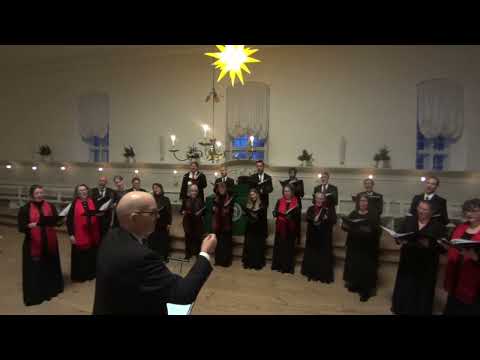
Day 6 - Jean Bouvard (1905-1996) was born in Lyon, France and studied in Paris with Louis Vierne, Vincent d'Indy and Paul Dukas. He was organist of Sainte Thérèse de Villeurbanne and Saint Nom de Jesus in Lyon. Throughout his career he has composed for organ, as well as pieces for chorus, and chamber music for winds, especially saxophones. For the Portland Community Orchestra's 2017 Holiday concert we performed an arrangement of one of Bouvard's most popular pieces, Noël vosgien, an organ work based on a Christmas carol from the Vosges region of eastern France, near its border with Germany.
Noël vosgien - composed by Jean Bouvard; performed by Paul Couëffé
Day 5 - The Italian-American Pietro Yon (1886-1943) was known primarily as a virtuoso organist. He graduated with honors from Rome’s Accademia di Santa Cecilia, gave a command performance before the King of Italy, and was appointed deputy organist of the Vatican all before he was twenty-one years old. He later moved to the United States and became organist and choir director of St. Patrick’s Cathedral in New York City, a position he held for nearly twenty years. His most famous work, the lovely carol Gesù Bambino (1917), resembles an old Italian Christmas pastorale, with its long melodic line, dotted rhythms and triple meter [see other examples like the Pastorale from Corelli's Christmas Concerto, and the Pifa from Handel's Messiah]. The melody and lyrics of the chorus are derived from the chorus of the popular carol Adeste Fideles (O Come All Ye Faithful). [a thank you to Michael Moore for his note about this carol]
Nell'umile capanna In the humble hut, nel freddo e povertà In cold and poverty è nato il Santo pargolo The Holy infant is born, che il mondo adorerà. Who the world will adore.
Osanna, osanna cantano Hosanna, hosanna, sing con giubilante cor With a joyous heart, i tuoi pastori ed angeli Your shepherds and angels, o re di luce e amor. O King of light and love.
Venite adoremus Come let us adore, venite adoremus Come let us adore, venite adoremus Come let us adore Dominum. Christ the Lord.
O bel bambin non piangere O beautiful boy do not cry non piangere, Redentor! Do not cry, Redeemer! la mamma tua cullandoti Your mother cradles you, ti bacia, O Salvator. Kisses you, O Savior.
Osanna, osanna cantano Hosanna, hosanna, sing con giubilante cor With a joyous heart, i tuoi pastori ed angeli Your shepherds and angels, o re di luce e amor. O King of light and love.
Venite adoremus Come let us adore, venite adoremus Come let us adore, venite adoremus Come let us adore Dominum. Christ the Lord.
Gesù Bambino - Kathleen Battle & Frederica von Stade
Gesù Bambino - Chicago Christmas Holiday Harpist
Gesù Bambino - arranged and performed by Jennifer Eklund
Day 4 - Cecil Frances Alexander took her position as an Anglican bishop’s wife very seriously. She accompanied her husband throughout his Ireland travels, scolding the wicked and praising the good, and most of all working with the youngsters, for whom she wrote a number of little poems and hymns. Her most famous collection was published in 1848 – Hymns for Little Children – and it was there that Once in Royal David’s City first appeared. A year later, H. J. Gauntlett discovered Mrs. Alexander’s poem and set it to music. The city, of course, is Bethlehem, the birthplace of Jesus and of His ancestor King David.
Since 1918, this carol has had the distinction of being played as the processional hymn during the Festival of Nine Lessons and Carols on Christmas Eve at King's College, Cambridge, and is one of only two carols or hymns which has the distinction of being played annually; the other is Hark The Herald Angels Sing. [a big thank you to the website The Hymns and Carols of Christmas for this very informative note!]
This is one of my favorite carols (it takes me to St. Thomas Church in New York City where their choir, too, presents the Nine Lessons and Carols on Christmas Eve. Just other worldly.
Once in royal David's city Stood a lowly cattle shed, Where a mother laid her Baby In a manger for His bed: Mary was that mother mild, Jesus Christ her little Child.
He came down to earth from heaven, Who is God and Lord of all, And His shelter was a stable, And His cradle was a stall; With the poor, and mean, and lowly, Lived on earth our Savior holy.
And through all His wondrous childhood He would honor and obey, Love and watch the lowly maiden, In whose gentle arms He lay: Christian children all must be Mild, obedient, good as He.
For he is our childhood's pattern; Day by day, like us He grew; He was little, weak and helpless, Tears and smiles like us He knew; And He feeleth for our sadness, And He shareth in our gladness.
And our eyes at last shall see Him, Through His own redeeming love; For that Child so dear and gentle Is our Lord in heaven above, And He leads His children on To the place where He is gone.
Not in that poor lowly stable, With the oxen standing by, We shall see Him; but in heaven, Set at God's right hand on high; Where like stars His children crowned All in white shall wait around.
Once in Royal David's City - Choir of King's College, Cambridge
Once in Royal David's City - Per-Olov Kindgren (guitar)
Once In Royal David's City - Sawlon (ukulele) . . . pure simplicity
. . . and a song from my youth, inspired by the carol, which I still love . . . Christmas Song (Once in Royal David's City) - Ian Anderson/Jethro Tull
- but they cut out at the end of the song, "Hey, Santa! Pass us that bottle, will you?"
Once in Royal David's City stood a lonely cattle shed, Where a mother held her baby. You'd do well to remember the things He later said.
When you're stuffing yourselves at the Christmas parties, You'll just laugh when I tell you to take a running jump. You're missing the point I'm sure does not need making That Christmas spirit is not what you drink.
So how can you laugh when your own mother's hungry, And how can you smile when the reasons for smiling are wrong? And if I just messed up your thoughtless pleasures, Remember, if you wish, this is just a Christmas song.
Day 3 (a day late!) - Infant Holy, Infant Lowly (W Żłobie Leży in Polish) is a traditional Polish Christmas carol. The text is believed to have been written by Piotr Skarga (1536-1612), the famous Jesuit, preacher, hagiographer, polemicist, and leading figure of the Counter-Reformation in the Polish–Lithuanian Commonwealth. The carol's tune is said to allude to the coronation polonaise written for King Władysław IV Vasa's coronation in 1633. The text was first translated into English by Edith Margaret Gellibrand Reed in 1920. Infant Holy, Infant Lowly (W Żłobie Leży) is one of the most popular Christmas carols that have become a permanent part of the Polish Christmas tradition, and its characteristic polonaise rhythm perfectly emphasizes the solemn nature of both festive liturgies and family gatherings.
Infant holy, Infant lowly,
Lying cradled in a stall.
Oxes lowing little knowing
That the Babe is Lord of All.
Swift are winging Angels singing
Nowels ringing, Tidings bringing
That the Babe is Lord of All.
Flocks were sleeping, shepherds keeping
In the fields their vigil true.
Saw the glory, heard the story
Which should bless the world anew.
Christians kneeling and appealing
For the healing truth, revealing
That the Babe is born for you.
Infant Holy, Infant Lowly - Choir of King's College, Cambridge
. . . and a much more Polish flavored interpretation
W Żlobie leży (Infant Holy, Infant Lowly) - Filharmonia Narodowa
Infant Holy, Infant Lowly - Danish National Vocal Ensemble
And a more contemporary take on the classic carol . . .
Infant Holy, Infant Lowly - Bringham Young University/Vocal Point
. . . and an 1886 set of variations on the tune by Alexandre Guilmant (1837-1911) - Introduction and variations on an Ancient Polish Christmas polonaise, op. 60
Day 2 (After) - Good King Wenceslas . . . We have all heard this carol since childhood, but most don't really know the story behind it. It turns out that the king of this carol was King Wenceslas (c.907-935), Duke of Bohemia (now the western portion of the Czech Republic). His grandfather and father had turned from paganism to Christianity, yet his mother was the daughter of a pagan tribal chief. When Wenceslas was 13, his father died, and his mother, having embraced paganism once again, tried to turn him away from Christianity. She was unsuccessful, and when Wenceslas turned 18, he gained the throne, had his mother exiled, and sought to reign over his people with mercy and justice as a truly Christian monarch. He is best known for his acts of kindness - one of which is immortalized in the carol we sing at Christmas. An early biographer wrote of his legendary deeds:
Rising every night from his noble bed, with bare feet and only one chamberlain, he went around to God's churches and gave alms generously to widows, orphans, those in prison and afflicted by every difficulty, so much so that he was considered, not a prince, but the father of all the wretched.
Beloved by his people, he ruled for a decade. But at the age of 28, he was assassinated on his way to church by his brother. Yet his influence lived on. He was considered a martyr, was canonized by the Catholic Church, and today is the patron saint of the Czech state. [thanks to Dr. Ralph F. Wilson for this note]
Good King Wenceslas tells the story of the king going on a journey and braving harsh winter weather to give alms to a poor peasant on the Feast of Stephen (December 26). During the journey, his page is about to give up the struggle against the cold weather, but is enabled to continue on by following the king's footprints, step for step, through the deep snow. In 1853, English hymn writer John Mason Neale wrote the lyrics to Good King Wenceslas, in collaboration with his music editor Thomas Helmore, and the carol first appeared in Carols for Christmas-Tide (1853). The text was set to the melody of 13th-century spring carol Tempus adest floridum (Eastertime has come), first published in the collection Piae Cantiones (1582). [the same collection, by the way, where Divinum mysterium first appeared!]
Good King Wenceslas looked out, on the Feast of Stephen, When the snow lay round about, deep and crisp and even; Brightly shone the moon that night, tho' the frost was cruel, When a poor man came in sight, gath'ring winter fuel.
"Hither, page, and stand by me, if thou know'st it, telling, Yonder peasant, who is he? Where and what his dwelling?" "Sire, he lives a good league hence, underneath the mountain; Right against the forest fence, by Saint Agnes' fountain."
"Bring me flesh, and bring me wine, bring me pine logs hither: Thou and I shall see him dine, when we bear them thither." Page and monarch, forth they went, forth they went together; Through the rude wind's wild lament and the bitter weather.
"Sire, the night is darker now, and the wind blows stronger; Fails my heart, I know not how; I can go no longer." "Mark my footsteps, good my page. Tread thou in them boldly Thou shalt find the winter's rage freeze thy blood less coldly."
In his master's steps he trod, where the snow lay dinted; Heat was in the very sod which the saint had printed. Therefore, Christian men, be sure, wealth or rank possessing, Ye who now will bless the poor, shall yourselves find blessing.
Good King Wenceslas - Lynn and Tony Hughes (concertina and guitar)
Good King Wenceslas - Howell's School Llandaff
Good King Wenceslas - Animation presented by SoulFM
Good King Wenceslas - Julien Neel (a cappella quartet)
What better way to celebrate Christmas Day than to enjoy the beautiful French carol Il est né (He is born). It was published for the first time in 1862 by R. Grosjean, organist of the Cathedral of Saint-Dié-des-Vosges, in a collection of carols entitled Airs des Noëls lorrains. The text of the carol was published for the first time in Dom G. Legeay's Noêls anciens (1875-76). Merry Christmas!
Il est né le divin enfant, / He is born, the Heav'nly Child, Jouez hautbois, / Oboes play, résonnez musettes / and bagpipes sounding. Il est né le divin enfant, / He is born, the Heav'nly Child, Chantons tous son avènement. / Let all sing His nativity.
Depuis plus de quatre mille ans, /Tis four thousand years & more, Nous le promettaient les prophètes /Prophets foretold His coming. Depuis plus de quatre mille ans, /Tis four thousand years & more Nous attendions cet heureux temps. /We waited this happy hour.
Chorus
Qu'il est beau, qu'il est charmant, / Ah, how lovely, Ah, how fair, Que ses grâces sont parfaites! / What perfection is His graces. Qu'il est beau, qu'il est charmant, / Ah, how lovely, Ah, how fair, Qu'il est doux ce divin enfant. / Child divine, so gentle there.
Chorus
Une étable est son logement / In a stable lodged is He, Un peu de paille est sa couchette / Straw is all He has for cradle. Une étable est son logement / In a stable lodged is He, Pour un dieu quel abaissement! / Oh how great humility!
Chorus
Partez, grands rois de l'Orient, / Jesus Lord, O King with power, Venez vous unir à nos fêtes / Though a little babe You come here. Partez, grands rois de l'Orient, / Jesus Lord, O King with power, Venez adorer cet enfant! / Rule o'er us from this glad hour!
Chorus
Il est né - Salt Lake Children's Choir (arr. by Ralph Woodward)
Il est né - Voces para la Paz (arr. by Gabriel Fauré)
Day 1 - Here we are . . . Christmas Eve, the last day before Christmas. I was SURE what I would present today, yet it's not flashy nor something that has been performed in numerous settings. It IS, however, my favorite tune for THIS Christmas.
The original text, Fröhlich soll mein Herze springen, was written by Paul Gerhardt in 1656. It was matched up early on with a 1653 tune by Johann Crüger (1598-1662). Soon after, Johann Georg Ebeling (1637-1676) composed a tune for the hymn (in 1667) which has stood the test of time.
Here is some deep background on the author, the various composers who have set the original AND the translated text: Paul Gerhardt (1607-1676) was a German theologian, Lutheran minister and hymnodist. Gerhardt is considered Germany's greatest hymn writer. Many of his best-known hymns were originally published in various church hymn-books, as for example in that for Brandenburg, which appeared in 1658; others first saw the light in Johann Crüger's Geistliche Kirchenmelodien (1647) and Praxis pietatis melica. The first complete collection is the Geistliche Andachten, published in 1666–1667 by Ebeling, music director in Berlin. Johann Georg Ebeling (1637-1676) was a German composer who was born in Lüneburg and died in Stettin. Ebeling is known as editor and composer of hymns by Paul Gerhardt. He published 120 hymns by Gerhardt (in 1667), adding new melodies to many, writing the first melody for 26 of them.
In 1858 Catherine Winkworth made an English translation of Fröhlich soll mein Herze springen - All my heart this night rejoices. This translation has inspired many composers to set the words to music. Here's a rundown of composers who have set Gerhardt's original text or Catherine Winkworth's English translation:
- Johann Crüger, 1653 [also harmonized by J.S. Bach] - Johann Ebeling, in Geistliche Andachten, 1666 [this tune is sometimes referred to as "Bonn"] - [tune: Briesen] by Johann Freylinghausen, 1704 - C. E. Horsley, 1862 - Robert Brown Borthwick, 1878 - [tune: Nativity New] arr. by Frederick C. Maker, 1881 - A. Esmond, 1890 - Frank L. Sealy, 1901 - George Coleman Gow, 1902 - Edward Vine Hall, 1903 - Frederick Bridge, 1903 - Patty Stair, 1907 - Allen K Blackall, 1911 - Lucien G Chaffin, 1915 - J. Booth, 1916 [published in "Carols Old and Carols New"] - F.C. Maker, 1916 [published in "Carols Old and Carols New"] - [tune: Stella] arr. by Horatio W. Parker, 1916 - C. Whitney Coombs, 1919 - Vernon Griffiths, 1920 - Hamilton Crawford Macdougall, 1920 - Kenneth A Brown, 1925 - L. Jewell, 1928 - Harold Clark, 1931 - Basil Harwood, 1942 - Frances McCollin, 1943 - Carl F. Mueller, 1946 - Clare Clement, 1948 - Paul George Bunjes, 1950 [Crüger tune] - W. Glen Darst, 1952 - Carl F. Mueller, 1956 - Hermann Erdlen, 1958 - Cecil Sharman, 1958 - Dale W. Barker, 1958 - Donald Joseph Cashmore, 1960 - Douglas Maggs Durston, 1960 - Cecil Bentz, 1960 - Sharon Elery Rogers, 1961 - Lois Myers Emig, 1962 - Paul C Van Dyke, 1962 - Jan Bender, 1964 - Ronald Arnatt, 1966 - Leo Sowerby, 1966 - Eric Harding Thiman, 1969 - Joseph Roff, 1970 - David H Williams, 1973 - Stephen Paulus, 1975 - Warner Hutchison, 1995 - Gwilym Beechey, 1995 - Leo Nestor, 1995 [Ebeling tune] - Z. Randall Stroope, 2006 - John Edward Sittard, 2007 - T. Chemain Evans, 2013 - Jonathan David, 2018
Now, here's the text and a few versions of this lovely Christmas hymn.
All my heart this night rejoices as I hear far and near sweetest angel voices. "Christ is born," their choirs are singing 'til the air ev'rywhere now with joy is ringing.
Hark! a voice from yonder manger, soft and sweet, doth entreat, "Flee from woe and danger. Brethren, come from all ills that grieve you, you are freed; all your need I will surely give you."
Come then, let us hasten yonder; Here let all, great and small, Kneel in awe and wonder. Love Him who with love is yearning; Hail the Star that from far Bright with hope is burning!
Thee, dear Lord, with heed I'll cherish, Live to Thee, and with Thee Dying, shall not perish; But shall dwell with Thee for ever, Far on high in the joy That can alter never.
(there are six more verses . . .)
All my heart this night rejoices - Cambridge Singers
All My Heart This Night Rejoices - Kristin Ballance
All My Heart this Night Rejoices - St. John Cathedral Choir Cleveland
Day 2 - Even though we missed the feast day of St. Nicholas (December 6th), I thought we'd use this second day before Christmas - when Santa should be very busy packing his sleigh - to hear a few less heard, but truly great, "contemporary" Christmas gems, most of which honor Good Old St. Nick . . .
Let's start with a personal favorite. Louis Armstrong and The Commanders recorded the Jack Fox song ‘Zat You Santa Claus? in 1953. It is possibly one of the first Christmas/Halloween hybrids, a forerunner in spirit, as it were, to films such as Nightmare Before Christmas. The singer of the song is concerned that the noise at the door might be Santa . . . or a prowler. Will Santa bring 'something pleasantly pleasant' for the singer . . . or maybe it’s only the wind? [thank you to Terence & Jane Minogue at The Daily Doo-Wop! for this note]
'Zat You, Santa Claus?
Gifts I'm preparing for some Christmas sharing,
But I pause because,
Hanging my stocking I can hear a knocking.
'Zat you, Santa Claus?
Sure is dark out, ain't the slightest spark out.
'Pon my slackened jaw!
Who's there? Who is it stopping for a visit?
'Zat you, Santa Claus?
Are you bringing a present for me,
Something pleasantly pleasant for me?
Then it's just what I've been waiting for.
Would you mind slipping it under the door?
Cold winds are howling, or could that be growling?
My legs feel like straws.
My my oh me my, kindly would you reply?
'Zat you, Santa Claus?
Hanging the stocking, I can hear a knocking.
'Zat you, Santa Claus?
I say, who's there, who is it? Are you stopping for a visit?
'Zat you, Santa Claus?
Oh there, Santa, you gave me a scare.
Now stop teasing cause I know you're there.
We don't believe in no goblins today,
But I can't explain why I'm shaking that way.
Bet I can see ole Santa in the keyhole.
I'll get to the cause.
One peek and I'll try there; oh oh, there's an eye there!
'Zat you, Santa Claus?
Please, please, pity my knees!
Say that's you, Santa Claus!
‘Zat You Santa Claus? - Louis Armstrong and The Commanders . . . and a Big Thanks for the great video: Sam Hall (producer), Hilary Buchanan (creative director), Alexis Schuknecht (art director), Ash Thomas (designer), and Ben Heuser (animator)!
Jazz giant Bill Evans takes a swing at Santa Claus is Coming to Town with typically beautiful results.
Jared Hollier has a different take on the same song . . .
Santa Claus Is Tapping Your Phone
Here's a song that most people know in the classic version by Bing Crosby and the Andrew Sisters (always worth numerous listens during the Christmas season), but Cynthia Lin and Ben Ahn make it even more fun!
Mele Kalikimaka is the thing to say
On a bright Hawaiian Christmas day
That's the island greeting that we send to you
From the land where palm trees sway
Here we know that Christmas will be green and bright
The sun to shine by day and all the stars at night
Mele Kalikimaka is Hawaii's way
To say Merry Christmas to you
. . . to say Merry Christmas
A very Merry Christmas
A very, very, Merry, Merry Christmas to you
Mele Kalikimaka - Cynthia Lin & Ben Ahn
And lastly, for a Smooth, Cool Yule . . . and a thoroughly enjoyable take on My Favorite Things. Sit back and relax!
Day 3 - Veni, veni, Emmanuel (O come, O come, Emmanuel) is a hymn for Advent and Christmas. Its text was written as early as the 12th century as a metrical paraphrase of the O Antiphons, a series of plainchant antiphons used during the final days before Christmas. The earliest know version of the tune, to date, was discovered in a 15th-century manuscript devoted to processional chants for burials. That early version uses the text Bone Jesu dulcis cunctis eterni patris filius (Good Jesus all sweet eternal Father). This tune, which we know today as Veni, veni, Emmanuel (O come, O come, Emmanuel) was first linked with the Veni Emmanuel text in 1851, when Thomas Helmore published it in the Hymnal Noted, paired with an early version of John Mason Neale's now well known English translation of the text.
We'll start with a Gregorian chant styled two voice version of the tune and text . . .
Veni, veni, Emmanuel (O come, O come, Emmanuel)
Because this is such a popular tune compared with some of the other songs we've heard earlier, there are pages upon pages of versions to choose from. Here are some of the most interesting and beautiful that I found. Enjoy!
Veni, veni Emmanuel! O come, O come, Emmanuel, Captivum solve Israel! And ransom captive Israel, Qui gemit in exilio, That mourns in lonely exile here, Privatus Dei Filio, Until the Son of God appear. Gaude, gaude, Emmanuel Rejoice! Rejoice! Emmanuel nascetur pro te, Israel. Shall come to thee, O Israel.
Veni o Jesse virgula! O come, Thou Rod of Jesse, free Ex hostis tuos ungula, Thine own from Satan's tyranny; De specu tuos tartari From depths of hell Thy people save, Educ, et antro barathri. And give them victory o'er the grave. Gaude, gaude, Emmanuel Rejoice! Rejoice! Emmanuel nascetur pro te, Israel. Shall come to thee, O Israel.
Veni, veni o oriens! O come, Thou Dayspring, from on high, Solare nos adveniens, And cheer us by Thy drawing nigh; Noctis depelle nebulas, Disperse the gloomy clouds of night, Dirasque noctis tenebras. And death's dark shadows put to flight. Gaude, gaude, Emmanuel Rejoice! Rejoice! Emmanuel nascetur pro te, Israel. Shall come to thee, O Israel.
Veni clavis Davidica! O come, Thou Key of David, come Regna reclude coelica, And open wide our heav'nly home; Fac iter Tutum superum, Make safe the way that leads on high, Et claude vias Inferum. And close the path to misery. Gaude, gaude, Emmanuel Rejoice! Rejoice! Emmanuel nascetur pro te, Israel. Shall come to thee, O Israel.
Veni, veni Adonai! O come, Adonai, Lord of might, Qui populo in Sinai Who to Thy tribes, on Sinai's height, Legem dedisti vertice, In ancient times didst give the law In maiestate gloriae. In cloud and majesty and awe. Gaude, gaude, Emmanuel Rejoice! Rejoice! Emmanuel nascetur pro te, Israel. Shall come to thee, O Israel.
Veni, veni, Emmanuel - The Gesualdo Six (arr. by Philip Lawson)
Day 4 . . . Before we get started today, I just wanted to add a note to yesterday's music. My brother Mark sent me a note saying that Henry Howell's piece Here is the little door, was "influenced by the external social and political conditions of the time. If it was composed in 1918, as you indicate, it would be written in the fouth year of WWI . . . a massive, catastrophic event that devastated much of the Continent. In the UK around six million men were mobilized, and of those just over 700,000 were killed. So martial images and rituals of death may have felt appropriate for the moment." That puts the references at the end of the poem to 'gold, he gives a keen-edged sword . . . incense, smoke of battle red, [and] myrrh for the honoured happy dead' into a completely different context. Thanks so much for the insight!
Today we'll turn to another ancient and beautiful Christmas hymn, Of The Father’s Love Begotten. The latin text Corde natus ex parentis was written by Aurelius Clemens Prudentius (348-413), a lawyer and judge serving under the Christian Emperor Theodosius in the Roman territory of Tarraconensis, which would be modern day Northern Spain. For the last 10 years of his life, Prudentius turned to writing poetry and hymns for the church. These words are taken from the Hymnus omnis horae (Hymn for every hour), a 37-stanza poem found in the hymn collection Cathemerinon. Corde natus ex parentis, originally containing nine verses, tells the story of the creation, fall and redemption of mankind through the incarnate Christ.
The music now associated with this text is the medieval plainchant melody Divinum mysterium. Divinum mysterium (with its own words) first appeared in the Finnish song book Piae Cantiones, published in 1582. The text of the Divinum mysterium was joined to the words of Prudentius's poem by Thomas Helmore in 1851.
To get us started, here are five of the verses sung by Skylark Vocal Ensemble (text is below):
Corde Natus Ex Parentis (Divinum Mysterium) - Skylark Vocal Ensemble
Corde natus ex parentis Of the Father's heart begotten, Ante mundi exordium Ere the world from chaos rose, A et O cognominatus, He is Alpha, from that Fountain ipse fons et clausula All that is and hath been flows; Omnium quae sunt, fuerunt, He is Omega, of all things, quaeque post futura sunt. Yet to come the mystic Close, Saeculorum saeculis. Evermore and evermore.
Ipse iussit et creata, By His Word was all created dixit ipse et facta sunt, He commanded and 'twas done; Terra, caelum, fossa ponti, Earth and sky and boundless ocean, trina rerum machina, Universe of three in one, Quaeque in his vigent All that sees the moon's soft radiance, sub alto solis et lunae globo. All that breathes beneath the sun, Saeculorum saeculis. Evermore and evermore.
O beatus ortus ille, O how blest that wondrous birthday, virgo cum puerpera When the Maid the curse retrieved, Edidit nostram salutem, Brought to birth mankind's salvation feta Sancto Spiritu, By the Holy Ghost conceived, Et puer redemptor orbis And the Babe, the world's Redeemer os sacratum protulit. In her loving arms received, Saeculorum saeculis. Evermore and evermore.
Psallat altitudo caeli, Sing, ye heights of heaven, his praises; psallite omnes angeli, Angels and Archangels, sing! Quidquid est virtutis usquam Wheresoe’er ye be, ye faithful, psallat in laudem Dei, Let your joyous anthems ring, Nulla linguarum silescat, Every tongue his name confessing, vox et omnis consonet. Countless voices answering, Saeculorum saeculis. Evermore and evermore.
Tibi, Christe, sit cum Patre Let the storm and summer sunshine, hagioque Pneumate Gliding stream and sounding shore, Hymnus, decus, laus perennis, Sea and forest, frost and zephyr, gratiarum actio, Day and night their Lord alone; Honor, virtus, victoria, Let creation join to laud thee regnum aeternaliter. Through the ages evermore, Saeculorum saeculis. Evermore and evermore.
Here's a fuller choral version posted online, unbelievably, just six days ago:
Of the Father's Love Begotten - Shepherd of the Lake Lutheran Church Section Leaders & Guest Artists
As I found out over the past week, there are so many lovely performances to choose from. Here's my favorite organ prelude on this theme (uploaded just five days ago!) . . .
And a serene transformation for celtic harp, played by Will the Harper:
Of the Father's Love Begotten - arranged as a slow Jig
And lastly, a gorgeous choral arrangement by Terry Schlenker (text is below) . . . Of Our Father's Love Begotten (Divinum Mysterium) - St. Martin's Chamber Choir
Of the Father's love begotten, Ere the worlds began to be, He is Alpha and Omega, He the source, the ending He, Of the things that are, that have been, And that future years shall see, Evermore and evermore!
O that birth forever blessèd, When the virgin, full of grace, By the Holy Ghost conceiving, Bore the Saviour of our race; And the Babe, the world's Redeemer, First revealed His sacred face, Evermore and evermore!
This is He Whom seers in old time Chanted of with one accord; Whom the voices of the prophets Promised in their faithful word; Now He shines, the long expected, Let creation praise its Lord, Evermore and evermore!
O ye heights of heaven adore Him; Angel hosts, His praises sing; Powers, dominions, bow before Him, and extol our God and King! Let no tongue on earth be silent, Every voice in concert ring, Evermore and evermore!
Christ, to Thee with God the Father, And, O Holy Ghost, with Thee, Hymn and chant with high thanksgiving, And unwearied praises be: Honor, glory, and dominion, And eternal victory, Evermore and evermore!
Day 5 - Charlie Warren gives us an introduction to today's piece: "Herbert Howells (1892-1983) composed Here is the little door in 1918 to the words of poet Frances Chesterton (1869-1938). Even in this early work (Howells was 26) there is an indication of the mystical choral style that he would later make his own. The poem depicts the visit of the Magi first through evocative description of the traditionally attributed gifts – gold, myrrh and incense. The second verse is where Howells’s word-painting comes to the fore in illustrating the ambivalence of Chesterton’s text. Christ repays the Magi with his own gifts – a sword and the smoke of battle, and returns the myrrh for embalming the ‘honored happy dead’. There is an uncomfortable tension wrought by the poem and setting which cannot be ignored. How can a message of peace and love be reconciled with a call to arms? Perhaps Here is the little door can serve as a salutory reminder; that there is an ever-present possibility for bold faith to be used in the service of deadly hate."
Here now, the peace and serenity of the season depicted in gorgeous music.
Here is the little door, lift up the latch, oh lift! We need not wander more but enter with our gift; Our gift of finest gold, Gold that was never bought nor sold; Myrrh to be strewn about his bed; Incense in clouds about his head; All for the Child that stirs not in his sleep. But holy slumber holds with ass and sheep.
Bend low about his bed, for each he has a gift; See how his eyes awake, lift up your hands, O lift! For gold, he gives a keen-edged sword (Defend with it Thy little Lord!), For incense, smoke of battle red. Myrrh for the honoured happy dead; Gifts for his children terrible and sweet, Touched by such tiny hands and Oh such tiny feet.